Pros and Cons of Homeschooling: What Parents Actually Need to Know
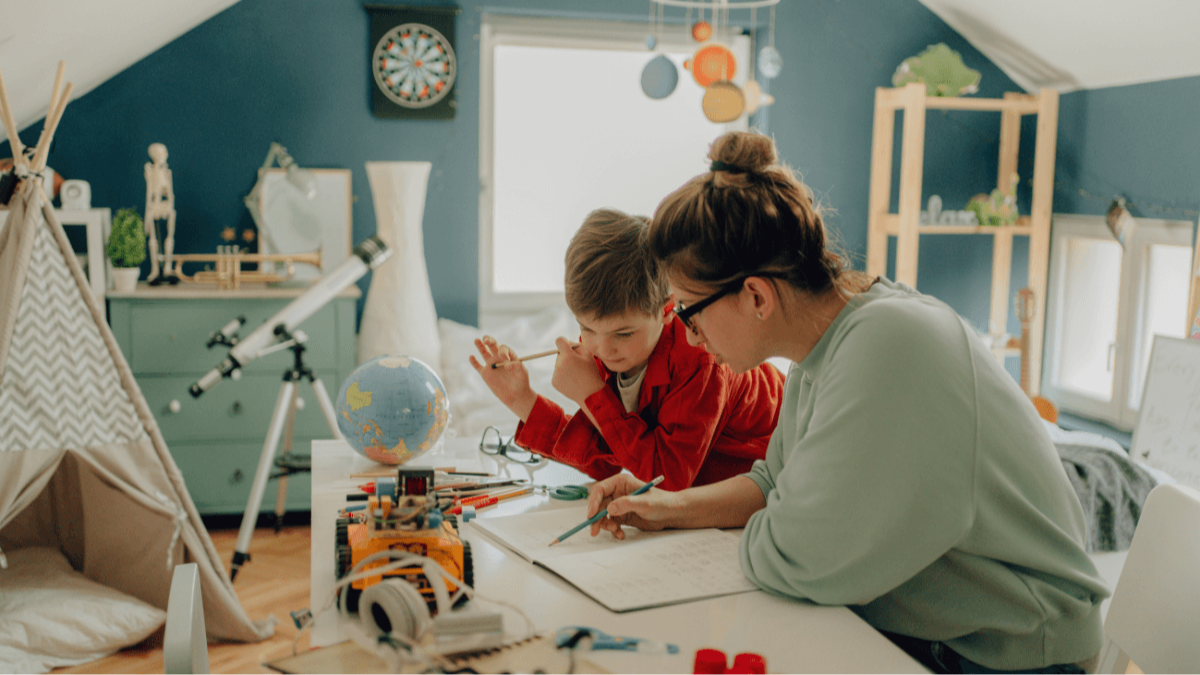
If you're weighing the pros and cons of homeschooling, you're probably not looking for someone to talk you into it or out of it. You want the real picture. What's great about it, what's hard, and whether it could actually work for your family.
I'm a homeschooling parent with two school-age children (ages five and seven), and our family has been doing this for two years now. We've homeschooled across multiple countries, juggled it alongside two working parents, and learned a lot about what this lifestyle actually looks like once the novelty wears off.
According to education statistics from the National Center for Education Statistics, homeschooling has grown significantly over the past decade, and the number of families choosing this path continues to rise. But popularity alone doesn't mean it's right for everyone.
This guide walks through the major pros and cons of homeschooling so you can make a thoughtful, informed decision for your kids and your family.
KEY TAKEAWAYS:
-
Homeschooling allows kids to learn at their own pace, which often means they move ahead academically without spending more hours at a desk than they would in a traditional classroom.
-
The flexibility to set your own schedule is one of the biggest benefits, but it requires real discipline and structure from the parents leading it.
-
Socialization is manageable and often richer than people assume, but it takes intentionality through neighborhood friends, co-ops, sports teams, community groups, and extracurricular activities.
-
The workload on parents is significant, especially when both parents are working. This is not a "set it and forget it" decision.
-
Homeschooling is not one-size-fits-all. The right choice depends on your family's capacity, your child's learning style, your resources, and your honest self-assessment.
-
Many families find a hybrid model, combining home education with tutorials or co-ops, to be the most sustainable long-term approach.
What Is Homeschooling?
Homeschooling is parent-led education that happens outside a traditional school setting. But it looks wildly different from family to family. Some parents follow a structured curriculum for every subject. Others take a more flexible, interest-led approach. Many families, ours included, land somewhere in the middle.
We use a structured curriculum for core subjects like English and math, and then the rest of our kids' education happens through real-world experiences, reading, travel, and intentional play. Our seven-year-old is registered as a first grader in Tennessee but is currently working through second-grade English and third-grade math. He's completing roughly a full year of curriculum each semester, not because we're pushing him through long days, but because focused one-on-one teaching is simply more efficient than a classroom of twenty-plus students.
Homeschooling doesn't require six to eight hours a day. Most homeschool families finish core academics in a few hours, leaving the rest of the day for free time, field trips, creative play, and the kind of hands-on learning that's hard to fit into public schooling.
Homeschooling also includes a wider range of models than many people think. There are a variety of homeschool programs like co-ops where parents share teaching responsibilities, hybrid tutorial models (our kids attend a tutorial two days a week in Tennessee), online curriculums, and microschools. The homeschool environment can be as structured or as flexible as a family needs it to be.
Pros of Homeschooling
You Set Your Own Schedule
The ability to build your family's schedule around your life, instead of the other way around, is one of the clearest benefits of homeschooling. You're not locked into a school calendar. You're not rushing out the door at 6:45 AM. You can structure lessons around your child's natural energy and attention patterns.
For our family, this has meant we can travel and live abroad while our kids keep learning. We've homeschooled in multiple countries, and the flexibility has allowed our children to experience the world in a way that traditional schooling simply wouldn't allow. We build in quiet time for an hour and a half to two hours each day where the kids read, build Legos, or play independently. That space for unstructured, screen-free time is something we deeply value, and it's only possible because we control the schedule.
This flexibility also matters for families navigating medical appointments, seasonal work, or children who simply learn better at different times of day. You're not fighting a system. You're designing one that works for your family and your unique setup.
Learning Happens at Your Child's Own Pace
In a traditional classroom, teachers manage twenty to thirty students across a range of abilities. Some kids are bored. Some are lost. And there's only so much a teacher can do about it. Homeschooling removes that constraint entirely.
Our son naturally accelerates in math. Some days, he completes three to four lessons because he's breezing through the material. In English, we've made a deliberate decision to move through every lesson sequentially, even though he could skip ahead, because we don't want him to miss any foundational grammar rules that could catch up to him later. That's the kind of individualized decision you can make when you're teaching your own child. You know them. You can challenge gifted students or slow down for a child who needs more time in a specific area without stigma or grade levels dictating the timeline.
This is especially valuable for kids with different learning needs. Children with ADHD, dyslexia, or other learning differences can get targeted support in a learning environment designed specifically for how they learn best. And siblings at different grade levels can learn together through mixed-age approaches that wouldn't be possible in a traditional school.
Stronger Family Relationships and More Time Together
Homeschooling gives you significantly more time with your kids during the years that matter most. Many families report that it leads to stronger relationships across the board, and that tracks with our experience. We are with our children for most of the day, and that closeness has built a level of trust, communication, and connection that I don't think we'd have if they were away at school for seven or eight hours a day.
Our family motto is "Bold, Strong, Brave," and homeschooling gives us the space to actually live that out daily, not just say it. We can have real conversations, teach values in real time, and be present for the small moments that parents with kids in traditional school can sometimes miss. Experienced homeschoolers often say this deeper family bond is what they value most, and I'd agree.
That said, I want to be honest about the hard parts too. This much time together is beautiful and sometimes challenging. There are days when the idea of sending them to school and having quiet hours to focus on work is very real. It takes intentionality to make sure you're enjoying the togetherness and not just surviving it.
Social Interaction Can Be Rich and Intentional
Every homeschooling parent has heard the socialization question. The assumption is that homeschooled kids are isolated. In our experience, the opposite is true, but it does take effort.
Our kids get social interaction through multiple channels. In Tennessee, they attended a tutorial program two days a week for about five hours each day. When we're worldschooling abroad, we connect with homeschool hub communities that organize beach meetups, sports, workshops, and group activities. In Mexico, our kids joined a soccer and gymnastics community, built friendships in our neighborhood, and attended a church with Wednesday night kids' groups and community dinners.
What I've noticed is that our kids are comfortable talking to other children, adults, and authority figures. They're confident approaching new people, and they don't limit their friendships to peers who happen to be the same age. That's a kind of social skill that can actually be harder to develop in a traditional classroom where kids are mostly sitting at desks, raising their hands, and interacting with same-age peers in structured ways.
We actually saw a meaningful shift after we pulled our daughter out of daycare. Within months, her grandmother noticed a dramatic change: better posture, more confidence, more talkative, and more assured. I think there's a real connection to attachment theory here. When children feel safe and connected with their parents, they develop the confidence to explore the world and build relationships with others. Homeschooling can extend that secure base in a powerful way.
That said, socialization doesn't happen automatically. If you're in a rural area with limited homeschool co-ops or extracurricular activities, you'll have to work harder to make sure your kids are getting regular, meaningful interaction with friends and peers.
Reduced School-Related Stress
Some children genuinely struggle in a traditional school setting. Bullying, social anxiety, rigid structures, and overstimulating environments can take a real toll. Homeschooling allows parents to create an emotionally supportive learning environment that removes those stressors.
This doesn't mean homeschooling eliminates all stress. But for kids who have been dealing with school-related anxiety or behavioral challenges tied to the school environment, coming home to learn can be transformative.
A Different Conversation About School Safety
This one is hard to write, but it's part of the honest conversation. For families in the United States, school safety has become something parents think about in a way previous generations never had to. The reality of gun violence in schools is not something most of us can fully ignore, even if the statistical likelihood of it affecting your specific child's school remains very low.
But what does affect nearly every child in a traditional school setting is the drills. Active shooter drills are now routine in most public and private schools across the country. That means young children regularly practice what to do if someone enters their school to hurt them. For many kids, especially the younger ones, that's a heavy thing to carry. They may not fully understand the context, but they understand enough to feel afraid.
For our family, this was a factor. Our kids are five and seven, and we want to protect their sense of safety in the world for as long as we reasonably can. Homeschooling removes that particular weight, in that form, from their childhood. I'm not saying this should be the reason anyone homeschools, and I want to be clear that the overwhelming majority of schools are safe places where dedicated teachers take care of kids every single day. But when parents are honestly weighing the pros and cons, this is part of the picture for many families, and it's worth naming.
Hands-On and Experiential Learning
Homeschooling opens the door to the kind of practical, experiential education that public schooling rarely has time for. Field trips aren't once-a-semester events. They can happen weekly. Cooking, gardening, building projects, visiting museums, volunteering, and community-based experiences all become part of the curriculum.
For our family, worldschooling has been the ultimate version of this. Our kids have learned geography, language, culture, and adaptability through actually living in different countries. They participate in local communities, wonder about how things work in different cultures, and have fun learning in ways that feel natural rather than forced. That kind of education is hard to replicate in a classroom, and it's made our homeschooling journey one of the most rewarding parts of our family life.
If you're interested in making experiential learning a bigger part of your approach, homeschooling gives you the freedom to design that.
Cons of Homeschooling
The Parent Workload Is Real
This is probably the biggest con of homeschooling that people underestimate. Teaching your children, even when the curriculum does a lot of the heavy lifting, takes consistent time, energy, and organization. You are the one responsible for planning lessons, guiding instruction, assessing progress, and managing the logistics of your child's entire education.
My husband and I both work while homeschooling, and it requires constant coordination. We tag team throughout the day, dividing and conquering. In some countries, we've hired a nanny or tutor for extra support. In others, it's just the two of us going back and forth. There is no version of homeschooling where a parent doesn't sacrifice significant time.
If both parents are working full-time with little flexibility, this becomes especially challenging. And I'll be direct: if the alternative to structured teaching time is excessive screen time, that's not actually giving your kids the benefit of homeschooling. That's just keeping them home without the education part.
It Requires Discipline and Structure From the Parents
Something I'd tell any parent considering homeschooling: your child's consistency depends on yours. If you struggle with organization, follow-through, or maintaining routines, homeschooling is going to magnify that.
You don't have to be perfect. But you do need self-discipline and a willingness to show up for the work every single day. The kids who thrive in homeschooling usually have parents who are organized enough to create structure and flexible enough to adapt when something isn't working.
Financial Costs and Opportunity Costs
Homeschooling is not free, even though you're not paying traditional school tuition. Curriculum materials, co-op fees, extracurricular activities, field trips, online courses, and enrichment programs all add up. And for many families, the bigger financial cost is the lost income or reduced career advancement that comes from one parent (or both) scaling back work hours to teach.
This is a real tradeoff that deserves honest evaluation. Some families can manage it on one income. Others find that going down to one income isn't realistic and need to get creative with scheduling, support systems, and hybrid models. Pretending the financial cost doesn't exist does a disservice to parents trying to make a responsible decision.
Gaps in Specialized Instruction
Most parents are not experts in every subject. As kids get older, advanced math, lab sciences, foreign languages, and specialized arts become harder to teach at home. This is where co-ops, tutorials, online courses, and community partnerships become essential.
In Tennessee, our kids' tutorial they attended handles some of the teaching load, and this kind of hybrid structure is increasingly common among homeschool families. But if you're in an area with fewer resources, finding teachers or programs to fill those gaps can be a real challenge.
The Socialization Question (The Honest Version)
I covered the upside of homeschool socialization above, but here's the honest flipside: it takes real work. Your kids will not have the built-in daily peer interaction that comes with traditional schooling. You have to actively seek out co-ops, sports teams, clubs, community classes, and other opportunities for your children to build and maintain friendships.
For many families, this is very doable. Homeschooled kids can build deep, meaningful friendships through shared interests and activities. But if your local homeschool community is small, if you're geographically isolated, or if you're too overwhelmed by the teaching workload to also coordinate social opportunities, your child's social interaction can suffer.
Regulatory and Transition Challenges
Homeschooling laws and requirements vary widely from state to state and country to country. Some states require regular assessments, portfolio reviews, or notification to the school district. Others are much more hands-off. Navigating these regulations adds a layer of administrative work that many parents don't anticipate.
Transitioning a homeschooled child back into traditional school can also present challenges. Academic placement, credit recognition, and social adjustment are all factors. And for older kids looking at college admissions, the process may require additional documentation, standardized test scores, or nontraditional transcripts that take extra planning to prepare.
Who Homeschooling Works Well For
Homeschooling tends to be a good fit for families where at least one parent has genuine excitement about leading their child's education. Not guilt or obligation, but actual desire and intentionality. It works well when parents are willing to create structure, invest time in research and planning, and stay consistent.
You don't have to be academically gifted yourself. There are so many strong curriculums, online resources, and support systems available now that many parents are surprised by how capable they are once they start. And if the idea of going it alone feels overwhelming, hybrid models like tutorials and co-ops offer a middle ground where you get the benefits of home education with professional support for some of the teaching.
Homeschooling can also be a great fit for kids who don't thrive in a traditional classroom, whether because of learning differences, social challenges, giftedness, health issues, or simply a different learning style that doesn't fit the standard school model.
Who May Struggle With Homeschooling
I think it's important to be honest about this. Homeschooling is not the right choice for every family, and there's no shame in that.
Parents who struggle with consistent routines, organization, or follow-through may find the demands of homeschooling overwhelming, especially if they also want their children to reach a high level of academic achievement. The gap between intention and execution can be hard on both the parent and the child.
Families where both parents work full time with little schedule flexibility will face real challenges. And parents who are currently navigating significant mental health struggles, like anxiety or mood instability, should think carefully about whether adding the pressure of homeschooling is healthy for them and for their kids. This isn't a judgment. It's practical wisdom. Sitting down with a counselor to evaluate your capacity honestly can be one of the most responsible things you do before making this decision.
If you're feeling torn, that's completely normal. This is a major lifestyle decision with real consequences in both directions. I'd encourage you to make your own pros and cons list, talk to homeschooling families in your area, and be ruthlessly honest about your capacity, your resources, and what your child actually needs.
FAQs About the Pros and Cons of Homeschooling
Is homeschooling better than public school?
There's no universal answer. Homeschooling offers flexibility, individualized instruction, and more family time, but public schooling provides built-in structure, socialization, and access to resources like sports teams, labs, and specialized teachers. The right choice depends on your child, your family, and your circumstances.
How do homeschooled kids socialize?
Through co-ops, sports teams, community groups, church programs, extracurricular activities, volunteer work, and neighborhood friendships. It takes intentional effort, but many homeschooled kids develop strong social skills and form deep friendships across a wider range of ages than they would in a traditional classroom.
What does homeschooling cost?
Costs vary widely depending on your approach. Curriculum materials, co-op fees, extracurriculars, and enrichment activities can range from a few hundred to several thousand dollars per year. The bigger financial factor for many families is the opportunity cost of reduced work hours or career impact for the teaching parent.
Can I homeschool if I work full time?
It's possible but challenging. Many working parents use flexible schedules, tag-team approaches with a partner, hybrid tutorial programs, or online curriculums to make it work. But it requires significant planning and support. Be honest with yourself about how much time you realistically have before committing.
Is homeschooling legal in every state?
Homeschooling is legal in all fifty U.S. states, but regulations differ significantly. Some states require standardized testing, portfolio reviews, or notification to the school district. Others have minimal oversight. Research your state's specific laws and requirements before you begin.
Will homeschooling hurt my child's college admissions?
Not if you are well-prepared and organized in your approach. Many universities actively welcome and are highly enthusiastic about homeschooled students, with some even creating specific admissions pathways for them. However, you may need to provide additional documentation, standardized test scores, or detailed transcripts. Planning ahead for this, especially with older kids, is important.
What's right for your family?
Weighing the pros and cons of homeschooling is deeply personal work. There are real, meaningful advantages: flexibility, individualized learning, stronger family bonds, and the freedom to design an education that fits your child. And there are real costs: the time commitment, the financial tradeoffs, the need for parental discipline, and the work required to make sure your kids have strong social connections and access to the resources they need.
The families who thrive with homeschooling are usually the ones who go in with realistic expectations, strong support systems, and a genuine desire to lead their child's education. They're not chasing a Pinterest-perfect vision. They're making an intentional choice that aligns with their family's values and capacity.
If you're considering homeschooling, do your research. Talk to families who are living it. Be honest about your strengths and your limitations. And know that there's no single right answer. The best decision is the one that's truly right for your family.

Kristina Ellis
Bestselling Education Author · M.Ed. · Homeschool Mom of 2
Kristina Ellis holds a Master’s in Education and is a homeschooling mom of two. She combines formal training with real-world experience to help families confidently design an education that fits their values and lifestyle. In addition to her work in education, she won over $500,000 in scholarships to attend Vanderbilt University debt-free and has helped thousands of families navigate college without loans.